

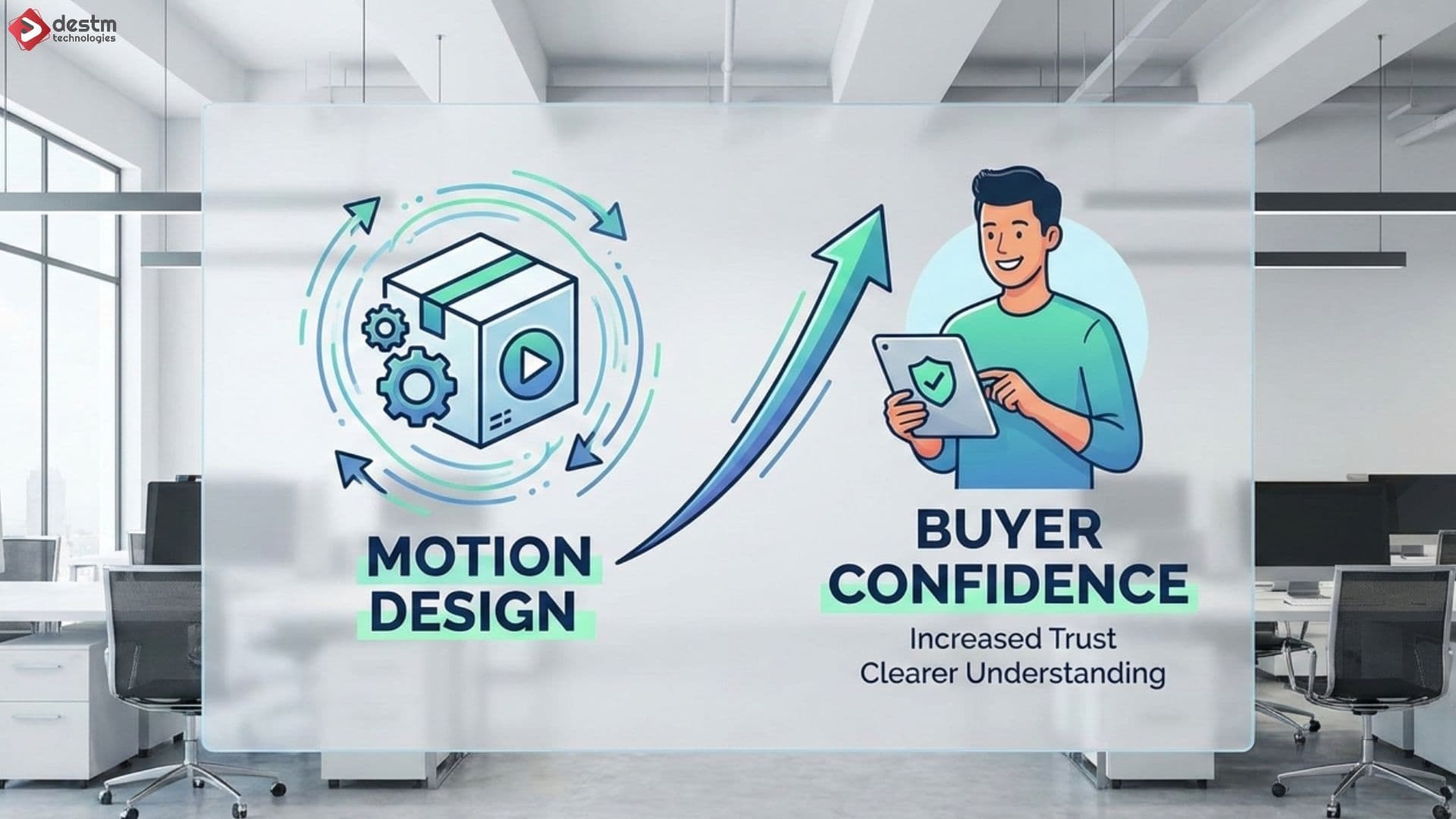
Motion design is no longer a purely aesthetic layer in digital experiences. As eCommerce interfaces grow more complex and user attention spans shorten, motion has evolved into a functional tool that guides interaction, clarifies intent, and reinforces trust. Buyers today subconsciously evaluate the reliability of a brand based on how smoothly and predictably an interface responds to their actions.
Static interfaces often fail to communicate system feedback, state changes, or next steps with enough clarity. In contrast, intentional motion design reduces uncertainty, helping users understand what is happening, why it is happening, and what to do next. A modern UX strategy treats motion not as decoration, but as a confidence-building mechanism embedded directly into the buyer journey.
Traditional UI design relies heavily on static elements—buttons, forms, and page transitions that change state abruptly or without explanation. While functional, this approach introduces subtle friction that impacts buyer trust.
Ambiguous System Feedback
Without motion, users are left guessing whether an action was successful. A static button click or page reload provides little reassurance that the system has responded correctly.
Cognitive Discontinuity
Sudden state changes—such as content appearing or disappearing instantly—force users to reorient themselves, increasing mental effort and hesitation.
Perceived Lack of Reliability
Interfaces that feel rigid or unresponsive often signal poor engineering or instability, even when the underlying system is technically sound.
Reduced Emotional Engagement
Static experiences fail to create a sense of flow. Without visual continuity, users are more likely to question the credibility of the experience and abandon it prematurely.
Effective motion design communicates intent, reinforces causality, and creates predictability—three critical factors in buyer confidence. When applied systematically, motion becomes a language that explains the interface without words.
Built with CuberiQ
Buyers need immediate reassurance that their actions have been registered.
Micro-Interactions for Confirmation
Subtle animations—such as button presses, form field highlights, or loading indicators—confirm successful input and reduce uncertainty.
State Transitions with Purpose
Smooth transitions between states (e.g., adding an item to cart or progressing through checkout) visually link cause and effect, reinforcing trust in the system.
Error Prevention and Recovery
Animated error states draw attention without alarm, helping users correct mistakes without feeling penalized.
Motion design plays a critical role in directing attention and reducing decision friction.
Hierarchy and Focus Control
Motion naturally draws the eye. By animating primary actions and de-emphasizing secondary ones, interfaces guide buyers toward confident decisions.
Progressive Disclosure
Instead of overwhelming users with information, motion allows content to appear contextually, improving comprehension and reducing hesitation.
Checkout Flow Continuity
Animated progress indicators and step transitions reassure buyers that they are moving forward—not starting over—during critical moments.
Buyer confidence is closely tied to how fast and stable an experience feels, not just how fast it is.
Skeleton Screens and Load Transitions
Motion-based placeholders reduce perceived wait times and prevent users from assuming the system has stalled.
Predictable Timing and Easing
Consistent animation timing creates a sense of control and reliability, signaling that the system is operating as expected.
Avoiding Abrupt Context Shifts
Motion bridges gaps between screens, helping users maintain orientation and trust the experience.
Effective motion design reassures users emotionally while remaining subtle and purposeful.
Humanizing Digital Interactions
Natural motion curves and responsive animations make interfaces feel more human and approachable.
Reducing Anxiety at High-Risk Moments
During payment, form submission, or confirmation steps, gentle motion reassures users that actions are secure and processed correctly.
Consistency Across Touchpoints
Consistent motion patterns across product pages, carts, and checkout reinforce brand reliability and professionalism.
Motion design should be treated as a measurable UX component, not a subjective enhancement.
Behavioral Analytics Integration
Session recordings and interaction analytics reveal how users respond to motion cues and where confidence breaks down.
A/B Testing Motion Variants
Testing animation timing, intensity, and placement helps identify what improves completion rates without adding friction.
Performance-Aware Implementation
Motion must be optimized for performance; poorly implemented animations can erode confidence faster than no motion at all.
Buyer confidence is built through clarity, predictability, and reassurance—qualities that motion design delivers when applied with intent. In an increasingly competitive digital landscape, static interfaces are no longer sufficient to communicate trust. Motion bridges the gap between user action and system response, turning uncertainty into confidence.
At Destm Technologies, we approach motion design as a functional layer of UX—one that supports conversion, reduces friction, and reinforces brand credibility across the buyer journey. When motion is purposeful, restrained, and performance-driven, it becomes a strategic asset rather than a visual flourish.
Ready To Transform Your E-commerce Business?
Let's discuss your project and explore how we can help you achieve your goals.
Trending Posts

Digital Twins in E-commerce Spatial Environments
Edge Observability Platforms — the control layer for distributed intelligence

The Next 10 Years of Emerging Technology — what businesses must prepare for now
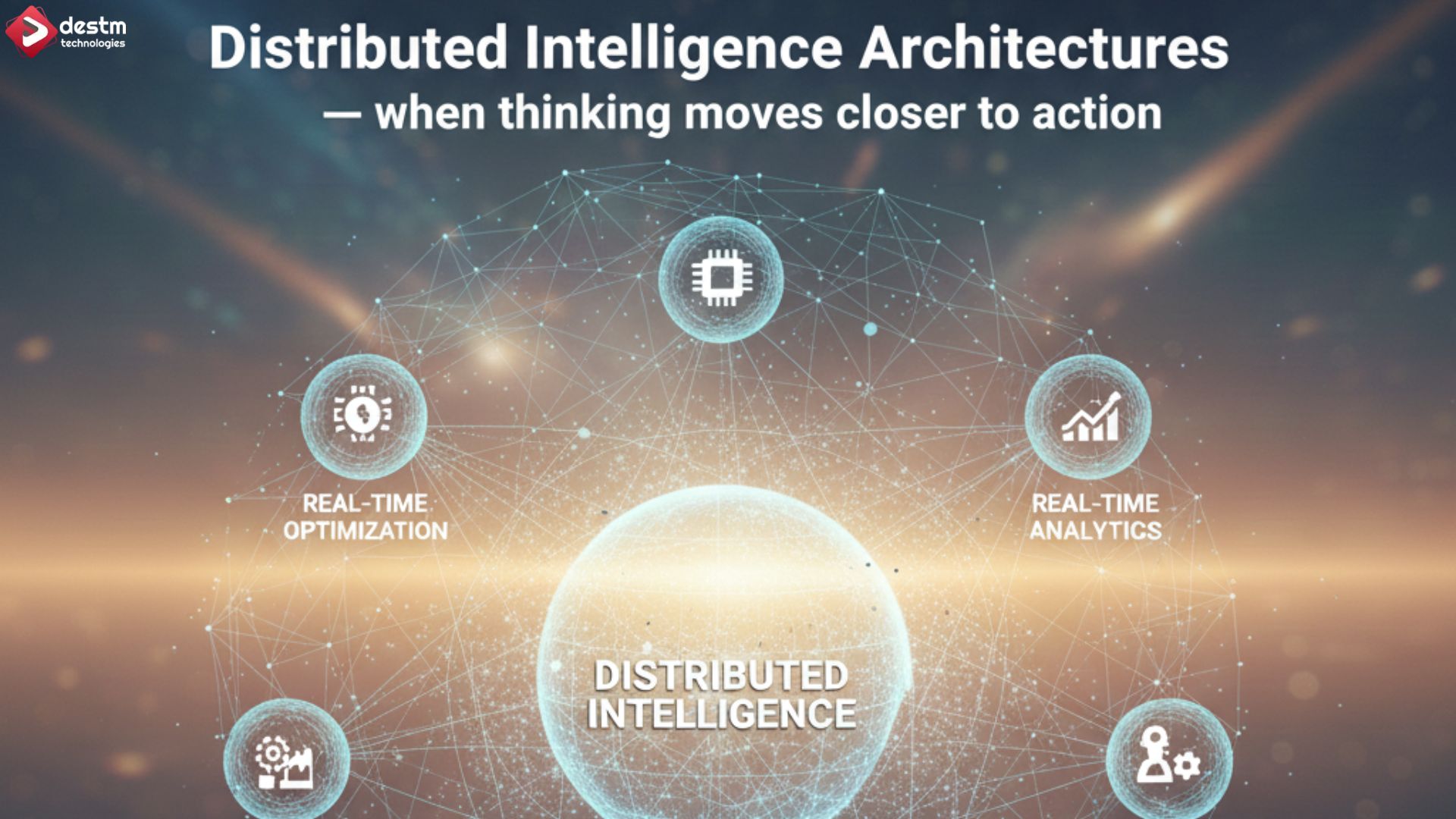
Distributed Intelligence Architectures — when thinking moves closer to action


