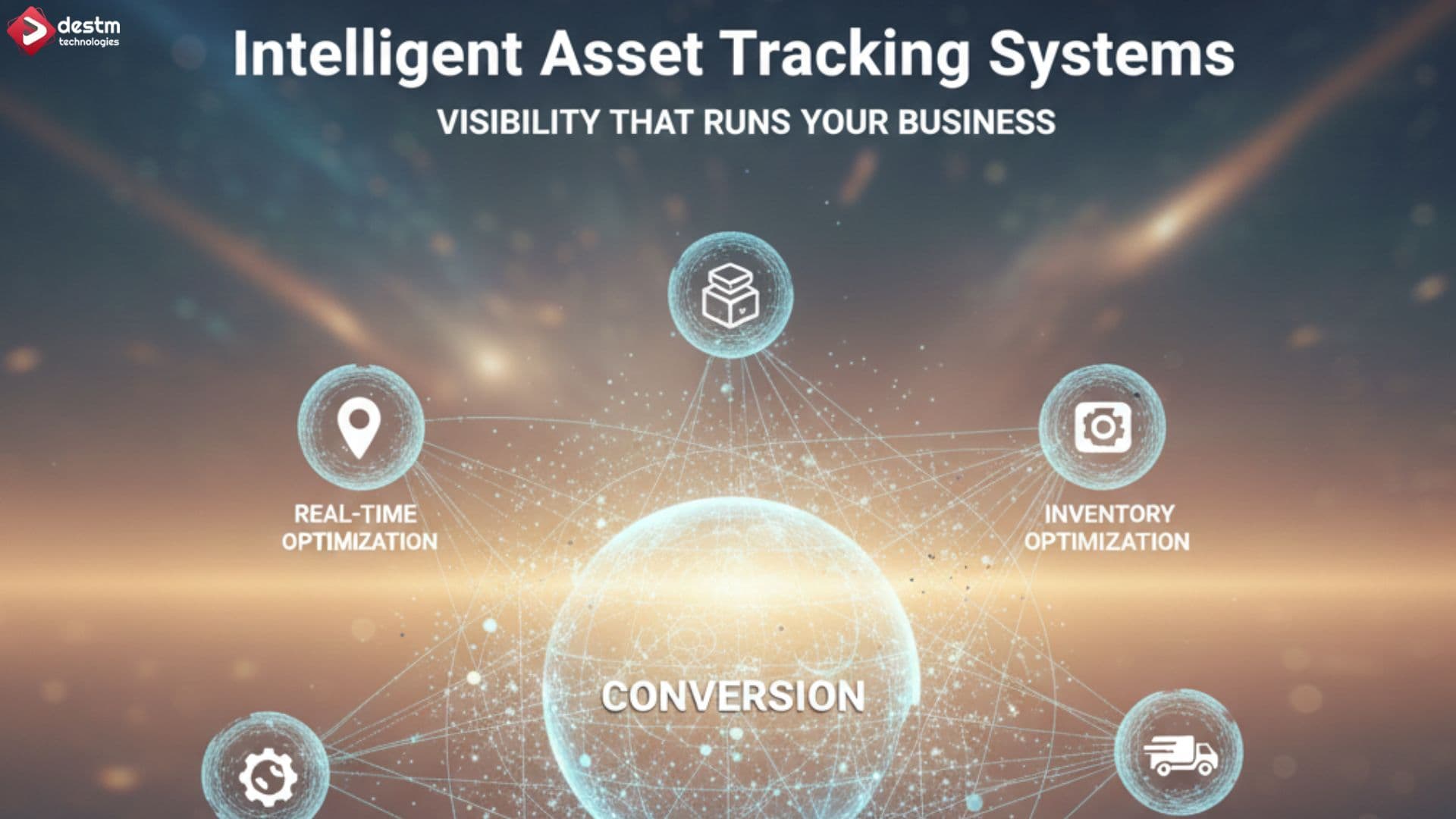
In a world where inventory sits across warehouses, trucks, stores, and customer sites, not knowing where your assets are costs time, money, and customer trust. Intelligent asset tracking systems fix that by combining sensors, connectivity, edge compute, and analytics so your organization can see, predict, and act on asset state in real time — not just after something goes wrong.
This post explains what modern intelligent asset tracking is, why it matters, how it’s built, practical implementation steps, KPIs, common pitfalls, and how to judge ROI.
Traditional tracking logs location or a barcode scan. Intelligent asset tracking goes further:
Real-time location + context (location, condition, usage, temperature, tamper).
Edge & cloud analytics that detect anomalies and predict failures.
Autonomous workflows (alerts, reorder, routing changes, maintenance tickets).
Integration with ERP/WMS/TMS so tracking data drives operations, finance, and customer experience.
Put simply: it’s tracking plus decisioning.
1. Sensors & tags
GPS (outdoor, vehicles), BLE, UWB, RFID (passive/active), NFC, and environmental sensors (temp, humidity, shock).
2. Connectivity
Cellular (LTE/5G), LoRaWAN, Wi-Fi, Bluetooth mesh, and LPWANs for low-power wide-area coverage.
3. Edge compute
Local processing for low-latency event detection (e.g., geofence breach, shock event).
Built with CuberiQ
Device management, telemetry ingestion, normalization, secure messaging.
5. Data analytics & AI
Real-time streaming analytics, anomaly detection, predictive maintenance, route optimization.
6. Integration layer
APIs to ERP, WMS, TMS, CRM, BI, and workflow systems.
7. Visualization & alerting
Dashboards, geofences, SLA monitors, automated triggers (SMS, email, API calls).
Inventory visibility & utilization — reduce idle assets, increase turns.
Reduced shrinkage & loss — real-time alerts and tamper detection.
Faster decision cycles — reroute shipments, reassign assets, avoid stockouts.
Lower maintenance costs — condition-based maintenance beats calendar-based.
Better customer experience — accurate ETAs and fewer “lost shipment” escalations.
Compliance & auditability — immutable telemetry helps regulatory reporting.
Sensors → Gateway/Edge Node → Secure Connectivity → IoT Platform (ingest + device mgmt) → Stream Processing & AI → Business Systems (ERP/WMS/TMS) → Dashboards & Alerts
Key design decisions: where to do analytics (edge vs cloud), how to secure device keys, TTL for telemetry, and integration touchpoints.
1. Define value & KPIs — e.g., reduce search time by 50%, cut asset loss 30%, improve utilization 15%.
2. Map assets & environments — indoor vs outdoor, asset mobility, power constraints.
3. Choose tracking tech by use case — UWB for high-precision indoor; GPS for vehicles; passive RFID
for cheap inventory checks; LoRa for long battery life.
4. Pilot small & measurable — select one asset class, deploy 100–500 tags, run for 90 days.
5. Measure, refine, integrate — tune geofences, thresholds, and integrate telemetry into workflows.
6. Scale stagewise — add asset classes, expand geography, automate workflows.
7. Operationalize — device lifecycle (provisioning, replacement), data retention, SOPs for alerts.
Asset location accuracy (meters)
Time to locate an asset (minutes)
Asset utilization rate (%)
Number of lost/stolen incidents per month
Mean time between failures (MTBF) for tracked equipment
Reduction in emergency procurement spend
Percentage of predictive maintenance actions vs reactive repairs
Battery life & maintenance — use ultra-low-power tags, energy harvesting, or plan efficient replacement cycles.
Indoor accuracy — combine UWB/BLE fingerprinting and anchor points for sub-meter precision.
Connectivity gaps — use store-and-forward at the edge and hybrid connect (LoRa + cellular).
Data overload — implement event-driven telemetry and sampling, not constant high-frequency streams.
Integration complexity — build a canonical asset model and use middleware with robust APIs.
Security & privacy — hardware attestation, secure key management, encrypted telemetry, and role-based access.
Costs: tags, gateways, connectivity, platform, integration, and operations.
Value levers: reduced loss, labor savings (faster search), fewer emergency purchases, longer asset life, improved SLAs.
Quick example: if average time to find assets costs 10 FTE hours/week × ₹500/hour → ₹5,000/week; halving search time saves ~₹130k/year — that alone can justify modest pilots. (Adjust to your region and scale.)
Prefer platforms with device-agnostic support and strong SDKs.
Validate out-of-the-box integrations with your ERP/WMS.
Check scalability: can it handle millions of telemetry events/day?
Inspect security posture: device attestation, data encryption, SOC/compliance reports.
Pilot on real assets, not in lab conditions.
Logistics: pallet and trailer tracking, real-time ETAs.
Manufacturing: tool tracking, process compliance, predictive maintenance.
Healthcare: tracking infusion pumps, wheelchairs, temperature-sensitive meds.
Retail: cycle counts, loss prevention, omnichannel fulfillment.
Construction: heavy-equipment utilization and theft prevention.
5G + edge AI for ultra-low-latency decisioning.
Battery-free RFID & energy harvesting for near-zero maintenance tags.
Digital twins fed by live telemetry for simulation & capacity planning.
Blockchain for provenance and immutable asset history in regulated industries.
Autonomous rebalancing: systems that trigger fulfillment or dispatch actions automatically.
Have you quantified the expected benefits? ✔
Mapped asset behavior & environment? ✔
Selected pilot scope with measurable KPIs? ✔
Chosen tech after real-world testing? ✔
Planned for maintenance and security? ✔
Intelligent asset tracking is a force multiplier — when implemented correctly it turns noisy telemetry into predictable operations and quantifiable savings.
Intelligent asset tracking is no longer about knowing where an asset is—it’s about knowing what it’s doing, why it matters, and what action should happen next. When tracking systems move from passive visibility to real-time intelligence, they unlock faster decisions, lower operational risk, and measurable cost savings across the entire supply chain.
At Destm Technologies, we design and implement intelligent asset tracking systems that go beyond location data. By combining IoT, real-time analytics, and deep integration with operational platforms, we help businesses turn asset data into actionable intelligence—from predictive maintenance to automated workflows and compliance-ready audit trails.
The result isn’t just better tracking.
It’s smarter operations, higher asset utilization, and scalable control in complex environments.
Ready To Transform Your E-commerce Business?
Let's discuss your project and explore how we can help you achieve your goals.